
Building Regulatory Confidence: How Structured Submission Support Reduces Risk in High-Growth Pharma
- Feb 16
- 2 min read

For fast-moving pharma companies, regulatory submission is not just a technical activity. It is a critical business function that directly affects timelines, partnerships, and long-term credibility with regulators and investors.
As organisations transition from development into key regulatory milestones, the pressure to move quickly often increases. However, speed without structure can introduce risk, inefficiency, and unnecessary delays.
The most successful companies recognise that regulatory execution requires both operational excellence and strategic planning.
Creating Stability During Periods of Growth
Many growing biotech teams experience rapid change. New hires, evolving programmes, and shifting priorities can make it difficult to maintain consistency in submission readiness. Without a structured framework, knowledge becomes fragmented, and teams spend valuable time reacting rather than progressing.
A well-designed submission model provides:
Clear document ownership and accountability
Defined workflows and governance
Consistent communication between internal teams and external partners
Confidence that timelines are realistic and achievable
This stability allows regulatory teams to focus on strategy while operational delivery remains reliable and predictable.
The Value of Embedded Expertise
Increasingly, organisations are moving away from transactional vendor relationships and towards embedded partnerships. This model ensures that submission specialists are aligned with internal teams, understand project priorities, and can respond quickly as programmes evolve.
An embedded approach supports:
Faster turnaround during critical milestones
Greater visibility of programme risks
Improved continuity and institutional knowledge
Reduced reliance on reactive, last-minute publishing
When teams feel supported and understood, overall productivity improves and pressure across departments is reduced.
Proactive Planning to Prevent Bottlenecks
One of the most common challenges in regulatory programmes is the bottleneck that occurs close to submission. Documents arrive late, reviews are compressed, and quality risks increase.
Proactive planning introduces:
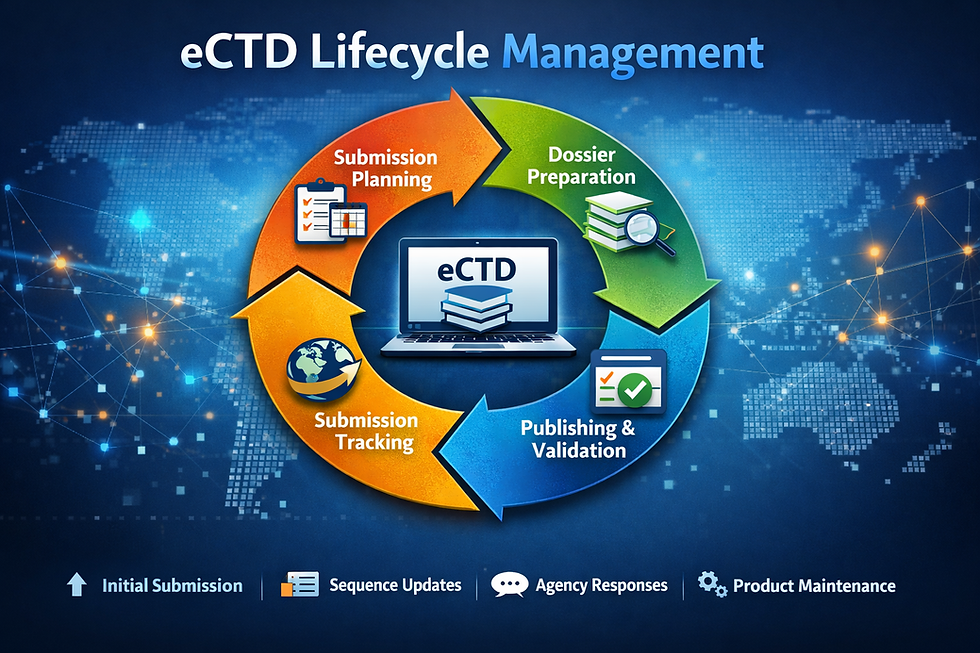
Submission planning tools that create transparency
Realistic scheduling aligned with clinical and CMC timelines
Early identification of high-risk activities
Structured training and onboarding for new team members
This forward-looking approach allows organisations to maintain momentum without compromising quality.
Ensuring Quality Without Slowing Progress
Quality and speed should not be seen as competing priorities. With the right processes in place, companies can achieve both.
This includes:
Standardised templates and publishing structures
Robust quality control and validation
Consistent lifecycle management
Scalable systems that grow with the organisation
These foundations not only support initial submissions but also ensure long-term regulatory efficiency.
Supporting Long-Term Partnerships
For many biotech companies, regulatory programmes are built on collaboration. Strong working relationships with external partners create trust, reduce friction, and enable smoother project delivery.
When support teams understand the broader business goals, they can prioritise effectively and adapt to changing needs. Over time, this partnership becomes a source of competitive advantage.
Looking Ahead
As regulatory expectations continue to evolve, companies that invest in structured, reliable submission support are better positioned to succeed. By combining strategic thinking with operational excellence, organisations can reduce risk, improve efficiency, and move confidently towards key milestones.
The future of regulatory success lies in preparation, collaboration, and trust.
Lets talk! We have the tools to guide you through your regulatory journey.


Comments